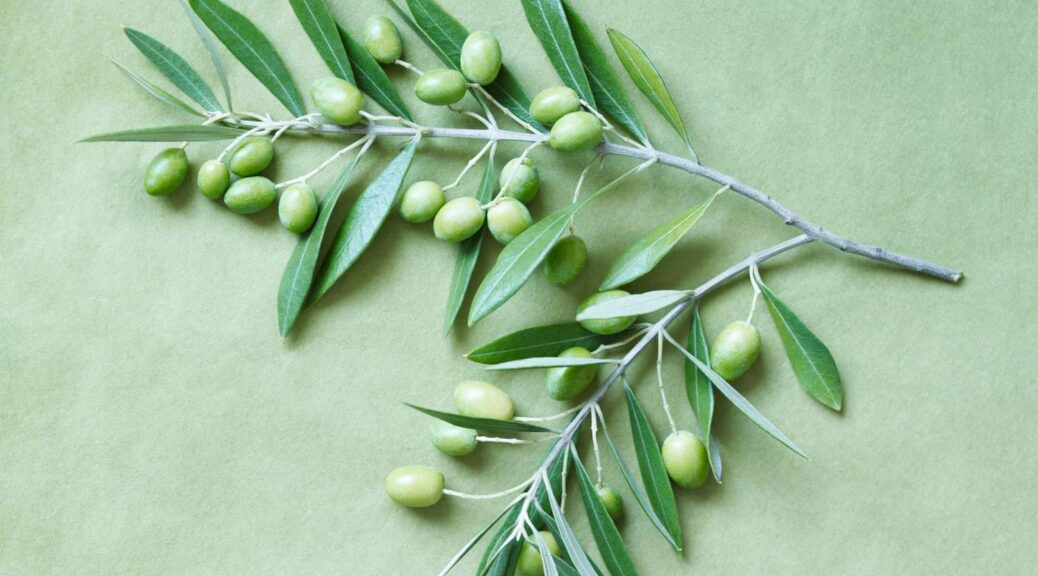
Miracles of Olive Leaf
Olive leaf is the leaf of the Olive tree- Olea europaea – a small evergreen tree native to Asia Minor and Syria but also cultivated in the Mediterranean area, Peru, Chile and South Australia. While the fruits of this tree-olives- and olive oil are very well known as highly beneficial as food ingredients all over the world nowadays, olive leaves and their amazing properties are less known and use outside the Mediterranean space
History: According to the Greek mythology Athena, the Goddess of heroic endeavour gifted the tree to the city of Athens and the olive leaves were considered the symbol of abundance, glory and peace while olive oil was the symbol of purity and goodness; in ancient times the winners in the Greek Olympic Games were crowned with a wreath of olive leaves.
In Ancient Egypt olive leaves were the symbol of heavenly power and the Egyptians were using the oil extracted from them for mummifying their kings, considering that these leaves were somehow associated with eternal life. And they were not exactly wrong, as nowadays it is proven that the olive tree can live thousands of years. There are seven olive trees in Israel that are over 3000 years old and they are all healthy and continue to produce olives, and in Israel scientists confirm that throughout are tens of ancient olive trees that are 1500-2000 years old & the ones in Gethsemane Garden in Jerusalem have witnessed the presence of Jesus Christ.
Actually the olive leaf is the first plant ever mentioned in the Bible; during the Great Flood mentioned in the Book of Genesis in the Bible, Noah came to find out that waters were decreasing when he saw the dove he had sent in order to find dry land coming back with an olive leaf in her mouth. This is the reason why nowadays the dove and the olive branch are considered the international symbol of peace. Olive leaf is also mentioned in Quran, the Holy Book of Islam.
Amazon #ads


Traditionally, olive leaves have been used since ancient times for treating high fever and for the topical treatment of wounds, infections and skin rashes.
Active compounds: There are more that 95 different medicinal compounds in the olive leaves, but the most important is an iridoid: oleuropein and the products resulted from its hydrolysis: elenolic acid and calcium elenolate that make the olive tree extremely resistant against insect and bacterial damage.
In animal study oleuropein was found to decrease blood pressure, dilate the coronary arteries, prevent intestinal muscle spasms, lower the elevated blood sugar levels, normalize arrhythmias and decrease high fever. At the University of Milan Pharmacological Sciences, researchers found that oleuropein inhibited oxidation of low-density lipoproteins, the so-called “bad cholesterol” involved in heart and arterial disease. This revelation, if confirmed by further research, suggests that oleuropein contains antioxidant properties similar to other phytochemical compounds. Elenolic acid has a strong antibacterial effect and inhibits the growth of viruses and calcium elenolate is effective against viruses, bacteria, fungi and parasitic protozoan’s and it is extremely safe and non toxic even in doses hundred times higher than recommended.
Olive leaves also contain several types of flavonoides and poliphenols that work as antioxidants and prevent free radical damage in the body.
Powerful Antiviral Action: studies show that olive leave appear to selectively block an entire virus-specific system in the infected host, they can inactivate viruses by preventing virus shredding, budding or assembly at the cell membrane and have the ability to penetrate infected cells and stop viral replication.
Powerful Antibacterial Action: at the Robert Lyons Clinic of Budapest, Hungary, a research study was done on 500 patients for: respiratory diseases (tonsillitis, pharyngitis, tracheitis); lung conditions such a pneumonia and bronchitis; dental problems (pulpitis, stomatitis); skin conditions such as herpes and other viral skin problems; bacterial skin infections; and ulcer disease (Helicobacter pylori infection). The rate of improvement and recovery from all bacterial and viral infections after the administration of olive leave extract was approximately 98%. For all patients involved in this clinical study, the body’s immune system was strengthened and none experienced any adverse side effects.
Anti Parasitic Action: studies found olive leaves effective against plasmodium falciparum, vivax and malaria. Reports about the benefits of the olive leaf extract in the treatment of malaria are present in the medical literature since 1827; one report in 1906 stated that olive leaves were superior to quinine for malarial infections.
Antioxidant: It contains some of the most powerful known antioxidants; as an antioxidant it protects blood vessels from damage and the heart from coronary occlusion and infarct. Studies performed at The Australian Centre for Complementary Medicine Education and Research, in 2005 found that olive leaves have five times the antioxidant capacity of vitamin C and almost double that of green tea or grape seed extract and it is a stronger antioxidant than vitamin E —therefore it could help to fight some inflammatory conditions.
Decreases high blood pressure: A study in Germany and Switzerland was carried out on 40 twins with borderline hypertension, between 18 and 60 years, for eight weeks. The extract obtained from dry olive leaves was put into capsules; one of the twins was given 500 mg and the other 1000 mg of the extract a day. The results showed that those who took a higher dose had an eleven mm Hg fall in the systolic blood pressure, while the other group had a five mm decrease. Lowers the cholesterol levels, especially LDL or bad cholesterol, Increases the blood flow through the coronary arteries, Stimulates the immune system, Powerful Antifungal Action, Reduces inflammation, Febrifugal & Antiseptic also.
Indicated for
Viral infections: influenza, Barr virus, chicken pox, mumps, measles, herpes zoster, herpes virus I and II, hepatitis A, B and C, human papilloma virus (HPV), HIV infection along with the conventional treatment-The Department of Biochemistry at New York University School of Medicine has investigated the antiviral activity of olive leaf extract (OLE) preparations against HIV-1 infection and replication and they found out that OLE inhibits acute infection and cell-to-cell transmission of HIV-1, inhibits HIV-1 replication and reverses many of the HIV-1 infection-associated changes in the cells. Moreover, in the effective dose range, no cytotoxicity on uninfected target cells was detected.
Amazon #ads
Bacterial infections: Pneumonia, Tuberculosis, gonorrhoea, dental, ear, urinary tract and surgical infections, encephalitis, meningitis, intestinal bacterial infections, gastritis with positive Helicobacter pillory Cancer Along with the conventional treatment. Even if significant research has not been done yet on the action of olive leaves in cancer, their strong immune boosting and antioxidant action along with the radio-protective effect suggests that it can be used with favourable results in this condition also.
Cardio-vascular diseases: Heart arrhythmia, high blood pressure, elevated cholesterol levels, for prevention of the heart attacks.
Fungal infections: Systemic candidiasis, chronic toenail fungal infection, genital or skin fungal infections
Parasites: Giardia, intestinal worms, malaria, dengue fever
Any condition involving a decreased efficiency on the immune system, Diabetes mellitus especially type II, Chronic fatigue syndrome, Fibromyalgia, Arthritis
Contraindications: There is very little information regarding the way olive leaf may affect a developing foetus or infant, therefore it is not recommended during pregnancy or breast-feeding. Olive leaves lower blood pressure and blood sugar levels, so it is recommended to be used cautiously along with anti hypertensive and/or anti diabetes therapy. Olive leaves are not recommended to persons with kidney stones
Forms of administration and recommended doses:
Olive leaf can be prepared either as powder in capsules or as a tincture (alcoholic extract).The general indicated dose for the powder is 2 grams a day, divided in four 500 mg doses, but these doses may be increased, for acute flu symptoms 1 gram every six hours and for acute infections 1.5 grams every six hours. The general dose for tincture is 40 drops 3 times a day in 100 ml water.
Dr. Andreea Dragomirescu, MD Medicine is member of the Romanian National Association for the Promotion of Unconventional Medical Branches, Romania. andreeariana@yahoo.com
Dr. Sanjeev Sood MD Ayurvedic Medicine is Prof. & Head of Panchakarma Department, Dayanand Ayurvedic College, Jalandhar, +91- 9814004142 drsanjeevsood@yahoo.com
More links
 Essentials of Tai Chi and Qigong – The Great Courses with David-Dorian Ross Master Tai Chi Instructor
What a great course. At first I thought it was going to be boring and just going to see repeat movements and all but there is so much knowledge and history to it and watching Master David […]
Essentials of Tai Chi and Qigong – The Great Courses with David-Dorian Ross Master Tai Chi Instructor
What a great course. At first I thought it was going to be boring and just going to see repeat movements and all but there is so much knowledge and history to it and watching Master David […] The Urantia Book: Revealing the Mysteries of God, the Universe, World History, Jesus, and Ourselves by The Urantia Foundation
First of all the book is 2000+ pages divided into 4 parts and 196 papers.Warning: If you think the table of contents and papers are hard to figure out... you're in for a whole load of […]
The Urantia Book: Revealing the Mysteries of God, the Universe, World History, Jesus, and Ourselves by The Urantia Foundation
First of all the book is 2000+ pages divided into 4 parts and 196 papers.Warning: If you think the table of contents and papers are hard to figure out... you're in for a whole load of […] Intention, attention and manifestation (Part II) by Sri Sri Ravi Shankar
Our life runs through intention. Everything we do has either a desire or intention or unconscious habit attached to it. Whether you want to drink a glass of water, take a walk or sit […]
Intention, attention and manifestation (Part II) by Sri Sri Ravi Shankar
Our life runs through intention. Everything we do has either a desire or intention or unconscious habit attached to it. Whether you want to drink a glass of water, take a walk or sit […] Bhagavad Gita Trimmed and Categorised by Paras
Paras note: I’ve only collected the shlokas that I thought were useful and catagorised them e.g. repeating themes, duties, emotions, practices to be performed, etc. Either I found it […]
Bhagavad Gita Trimmed and Categorised by Paras
Paras note: I’ve only collected the shlokas that I thought were useful and catagorised them e.g. repeating themes, duties, emotions, practices to be performed, etc. Either I found it […]


