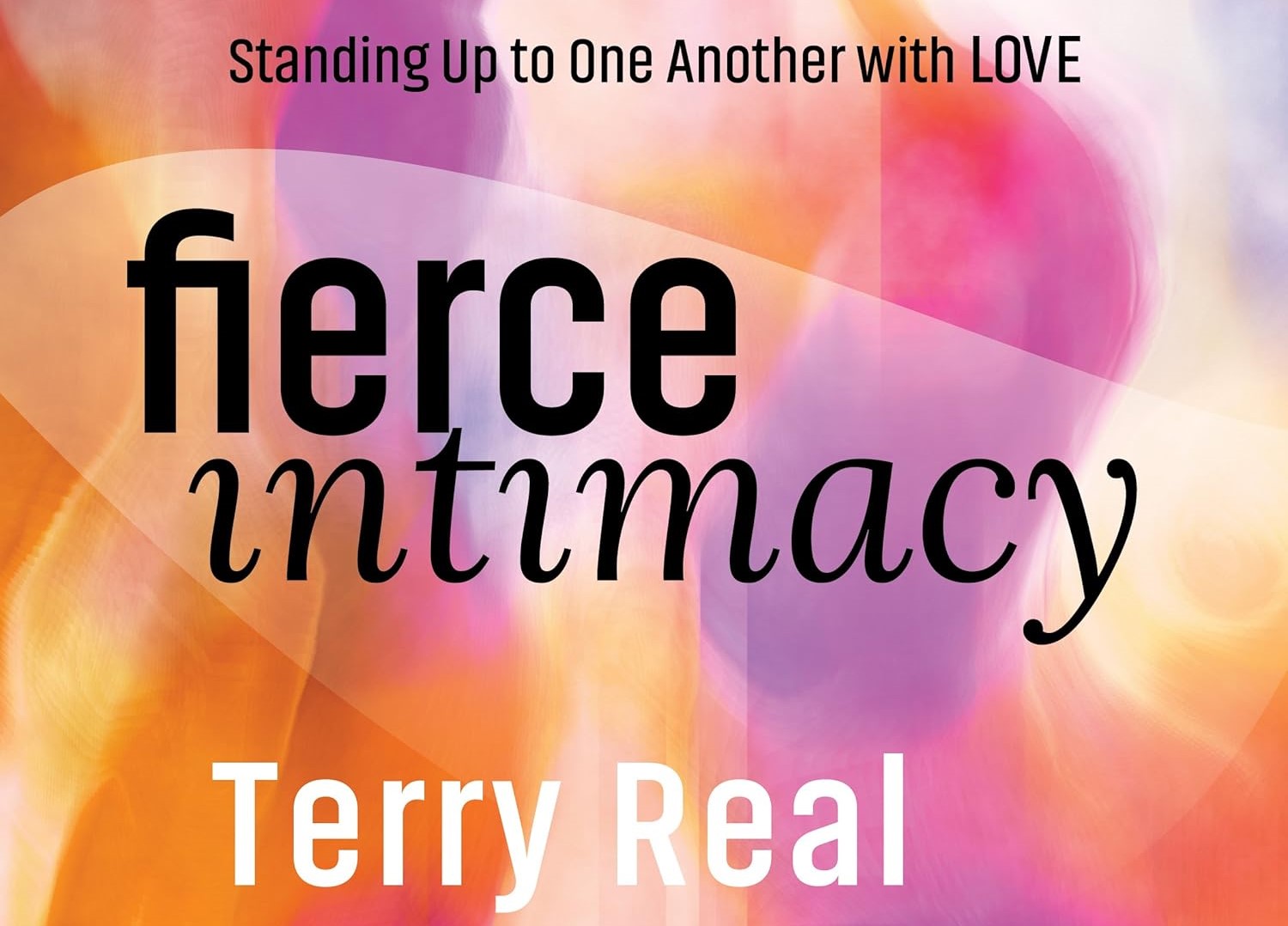
Harmony, disharmony, and repair is the essential rhythm of all intimate human relationships. One dinner conversation can have 20 occurrences.

Harmony: Love without knowledge.
This is when you don’t know much about them.
Disharmony: Knowledge without love.
This is where you know more of them and that is why you have some kind of hurt and anger.
Repair: Knowing love.
This is mature love. You see the warts and moles and you love them anyway. They are worth it and the good outweighs the bad.
James Framo wrote back in the 50s when it was assumed that the person you were sleeping with was your spouse, by the way. Framo wrote, the day you turn over in bed, look at the person next to you and realize this is a dreadful mistake. You have been had. The one you fell in love with is not the one you’re spending your life with. That day, says Framo, is the first day of your real marriage.
Tool to know if you should say or go – A relational reckoning
Ask yourself: Am I getting enough in this relationship to make grieving what I’m not getting worth my while? Am I getting enough in this relationship to offset the pain of what’s wrong and what’s lacking?
5 Losing Strategies
What happens in the disharmony phase is that we are triggered. Early wounds, old family of origin dramas come to the surface. We take our eyes off the prize. We stop thinking about making things better between us and the partner we love. And instead, we are taken over by adaptive child strategies, by different agendas. Being right, controlling your partner, unbridled self-expression, retaliation, and withdrawal.
1 – Being right: trying to solve the issue by finding out who is write is the wrong way. You were yelling, no I wasn’t, yes you were. It leads to self-righteous indignation which has no place in the argument.
Solution: How are the two of us going to work like a team and solve this issue in a way that we can both live with?
2 – Controlling your partner: Trying to get your partner to see this or that or do this and that. Can be direct – shut up or else (more male), or indirect – manipulation (more female). Men mistrust women because of this and it’s scary for women but it is the healthy way. Both sides do this as they choose to be in this contract with each other. Remember that anytime your partner does yield to you because of your control, there will be payback or consequences.
Solution: Give it up.
3 – Unbridled self-expression: Ventilating. You never, you always, you are a. Terry calls this the barf bag as it’s just vomiting it. You’re like your mother/father. Suppression on one side and expression all of a sudden is not good.
Solution: Functional move are moves that help your partner to get to resolution. E.g. what they didn’t do today, they can do something about. But don’t bring up few years ago and then using ‘always/never’ phrases. You can bite your tongue and the more you practice using a containing boundary the better you’ll get at it. Read on for a framework of ventilating the right way.
4 – Retaliation: Revenge or getting even. It’s about offending from the victim position. Terry says it’s the cause of 90% of the world’s violence. You did this to my family I’ll do this to yours. Every offender thinks that they’re a victim. There are 2 forms, 1 Direct which is rage, 2 Indirect which is passive aggression.
Solution: Both sides need to find a way to move into the accountable position.
5 – Withdrawal: This is proactive distancing or refusing to engage. They’ll say something like ‘Well, I’m just accepting that we can’t talk about our parenting and I’ve made my peace with that.’ No, you haven’t. You’re lying to yourself. The trick is, are you resentful? If you’re resentful, you are not truly into acceptance.
Solution: Move back into engagement and duke it out. If you do distance, do it responsibly. ‘I’m taking distance. Here’s for how long. Here’s when I come back. And here’s why I’m doing it.’ There’s an explanation and there’s a promise of return. This does a lot to quell your partner’s anxieties. It is not a rupture. It is a break.
Shaking hands with the Adaptive Child
When your adaptive child takes over, you lose perspective and engage in unproductive behaviors like trying to be right, controlling, venting, hurting, or withdrawing. It’s crucial to remember that the person you’re speaking to is someone you love, and the goal of communication is to improve the relationship. Recognize and understand this part of yourself to manage it effectively. By getting to know your adaptive child, you can encircle and manage it, ensuring healthier interactions and keeping your eyes on the prize of making things better.
Your Losing Strategy Profile (LSP)
Get a paper and pen and take notes for this.
– What are my most usual losing strategies from the 5? Could be one or a combination or 2 step.
– You can also diagnose your partner from your point of view. What do they do from the 5.
– Now put them together and form sentences like ‘the more I (insert your losing strategies), the more my partner (insert losing strategies).
– You’ve discovered your relationship dynamic now and you can do it for other types of relationships too.
Hey folks, it’s Paras!
If you have a request to see a tech product, summary on personal development or want a custom design for clothing and merch … Please do let me know through the links below.

Join me or support my work
🎤 Podcasts: My Stories | Self Growth
💌 Monthly email summary
▶️ YouTube | TikTok | Instagram
👍 Facebook | X | Blog
Other links:
💰Get $25 of FREE Bitcoin
☕ Buy me a Coffee
🛒 My Amazon |👕 My Merch
🏫 Join Skool


