(Full video of this summary at the bottom of the page.)
The face scar (or Scarface ;oP) experiment: Showed that people who believed they had a visible flaw felt judged and treated differently, even after the scar had been removed, proving that we often see the world through our insecurities rather than reality.
The Glass and Ball Analogy
Water in the glass = Your self-image.
Ball = A self-doubting thought.
When your self-image is strong, self-doubt floats like a ping-pong ball. You see it, acknowledge it, and move on.
When your self-image is weak, self-doubt sinks like a golf ball. It displaces your confidence, courage and self-worth becoming part of how you see yourself.
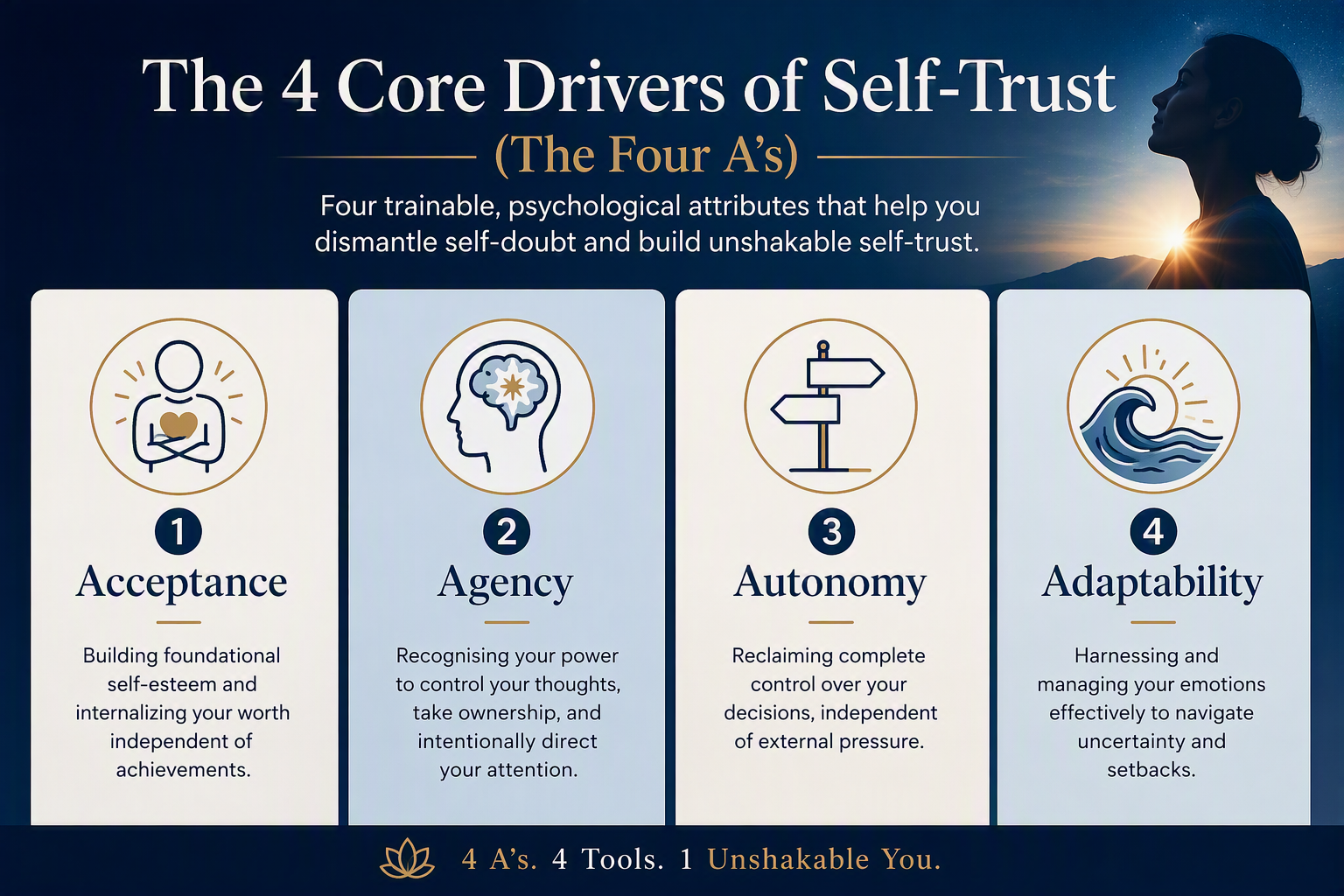
Confidence isn’t the absence of self-doubt. It’s refusing to let self-doubt define who you are. There are 4 attributes to strengthen. Now lets build a stronger self-image so that doubt can no longer weigh you down.
4 Attributes to Build Self-Trust
1 Acceptance
Accepting that you are a work-in-progress, you don’t need others approval. You are worthy just by existing. Like everyone else. Until you accept yourself nothing will change. You can use the Care Less List (see below).
This is from my post on Criticism
I am a good and worthwhile person whether or not this is true. I am completely independent of the good and bad opinion of others.
2 Agency
The trust in yourself that you CAN do something, and if you can’t … you’ll learn how to. Beware of:
– Imposter syndrome too. It’s far more common and it is a sign that you are growing. Instead of thinking ‘I don’t belong here’, tell yourself ‘what an incredible opportunity for me to learn and grow’.
– Comparing with others. Paras note: I always say compare yourself with your old self (yester-me).
– Stop waiting for the perfect time or when you’re ready. You’ll learn a bit more and then …
3 Autonomy
You have a degree of control over your life. You focus on what you can control and that feeds back to more. You end up overthinking and anticipating everything that goes wrong. Instead of saying stop overthinking, write your worry down and tell that note that you’ll worry about this when it’s worry time. At the end of the day schedule worry time but not too close to bedtime. Bring out your worry list and let go. You’ll notice a lot of them would have shrunk. When the alarm goes off your worry time is over and you can reflect what you could have controlled. If you struggle with autonomy you:
– Complain instead of doing something about it and then complaining becomes your default. They use the word ‘should’ a lot. Move from should to could. Then make 2 columns of ‘I could’ on the left and ‘I will’ on the right. DO IT! Become aware of it as ask yourself if you’re going to accept it, change it, leave it or change your view of the situation.
– Blame others so you don’t take accountability. Always or never language. Before saying it, change the wording e.g. I noticed that I get cut off when I’m speaking (instead of ‘you always cut me off’). Try and bring it back to you.
– Resentment to others being better off as a victim mindset.
4 Adaptability
Adapting to emotions that come with life. If you feel like you can’t deal with the emotions it will bother you but you go and find out how to deal with the emotions. Use the opposite action strategy (see below).
The Care Less List
Write down what you want to care less about (other people’s opinions, appearance, past mistakes, etc.) in the left column and what you want to care more about (growth, courage, values, goals) in the right column, then consciously redirect your attention from the first list to the second.
Opposite Action Strategy
When self-doubt, fear or anxiety makes you want to withdraw, avoid, shrink or stay silent, do the opposite of what the emotion is telling you to do (as long as there is no physical threat). Want to hide? Speak up! Want to avoid conversation? Start the conversation!
Neck Flexion
Research suggests that the distance between your chin and chest influences how confident and powerful you feel. When self-doubt causes you to shrink, simply lift your chin and lengthen your neck to create a more open, confident posture.
How to Sound More Confident
Confidence in speech comes from breathing deeply, speaking clearly, slowing down and projecting your voice from your diaphragm rather than your throat. (Pen between the mouth exercise).
4 Patterns of Low Self-Acceptance
1 Pressure to Prove: This is why achieving goals will not work because once you achieve it, you’ll want something else. Once you get there you don’t feel like enough still.
2 Likability Trap: Seeking approval from others by people-pleasing, avoiding conflict and sacrificing your own needs to be liked.
3 Shrinking Syndrome: Holding back from opportunities because fear of failure, judgment or inadequacy convinces you to stay small.
4 Schadenfreude Cycle: Feeling satisfaction when others fail because it temporarily eases your own feelings of insecurity and self-rejection.
Ways to Build Self-Acceptance
Use the Care Less List: See above.
Replace Apologies with Appreciation: Instead of “Sorry I’m emotional,” say “Thank you for your patience.” Stop apologising for being human.
Pause Before Saying Yes: Create space between a request and your response. Ask yourself whether saying yes is aligned with your needs and values. More on this here – The Power of Saying NO – Quotes and Ways to Say No
Learn to Say No as a Yes to Yourself: Reframe boundaries as self-respect, not selfishness. More on Boundaries here.
Get a Hobby: Build an identity outside of work, achievement or caregiving. Hobbies remind you that you are more than what you do.
Avoid Positive Affirmations You Don’t Believe: Instead of forcing statements like “I’m amazing,” use realistic, growth-oriented statements anchored in truth.
Use Growth-Oriented Self-Talk: Replace “I’m boring” with “I bring a calm, grounded presence.” Replace “I’m unlovable” with “I have qualities the right people value.”
Courage vs. Human Scale
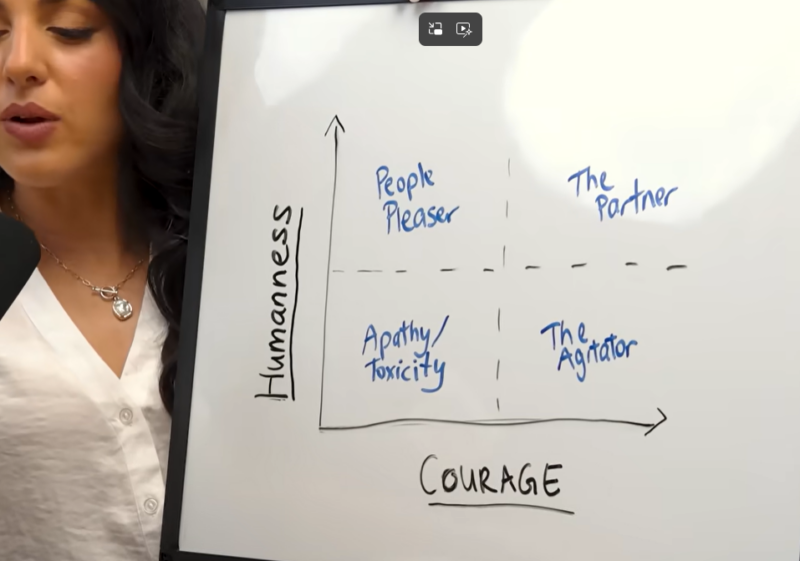
The ideal state is being a Partner: combining the courage to do hard things with the humanness to care about people.
This framework maps people into four quadrants based on two traits:
– Humanness = Empathy, warmth, compassion, collaboration.
– Courage = Accountability, feedback, decision-making, performance.
High Humanness + Low Courage = People Pleaser: Wants to be liked. Avoids difficult conversations. Often says yes when they mean no.
Low Humanness + High Courage = Agitator: Results-focused but lacks empathy. Can come across as cold, harsh or intimidating. Often steamrolls others.
Low Humanness + Low Courage = Apathetic/Toxic: Disengaged, negative and passive. Avoids responsibility. Often blames circumstances or other people.
High Humanness + High Courage = Partner: Balances empathy with accountability. Gives honest feedback with care. Helps others succeed while pursuing results.
Hey folks, it’s Paras!
If you have a request to see a tech product, summary on personal development or want a custom design for clothing and merch … Please do let me know through the links below.

Join me or support my work
💌 Monthly email sign up for all posts
▶️ YouTube | TikTok | Instagram
👍 Facebook | X | Blog
🎤 Podcasts: My Stories | Self Growth
Other links:
☕ Buy me a Coffee
🛒 My Amazon
👕 My Merch