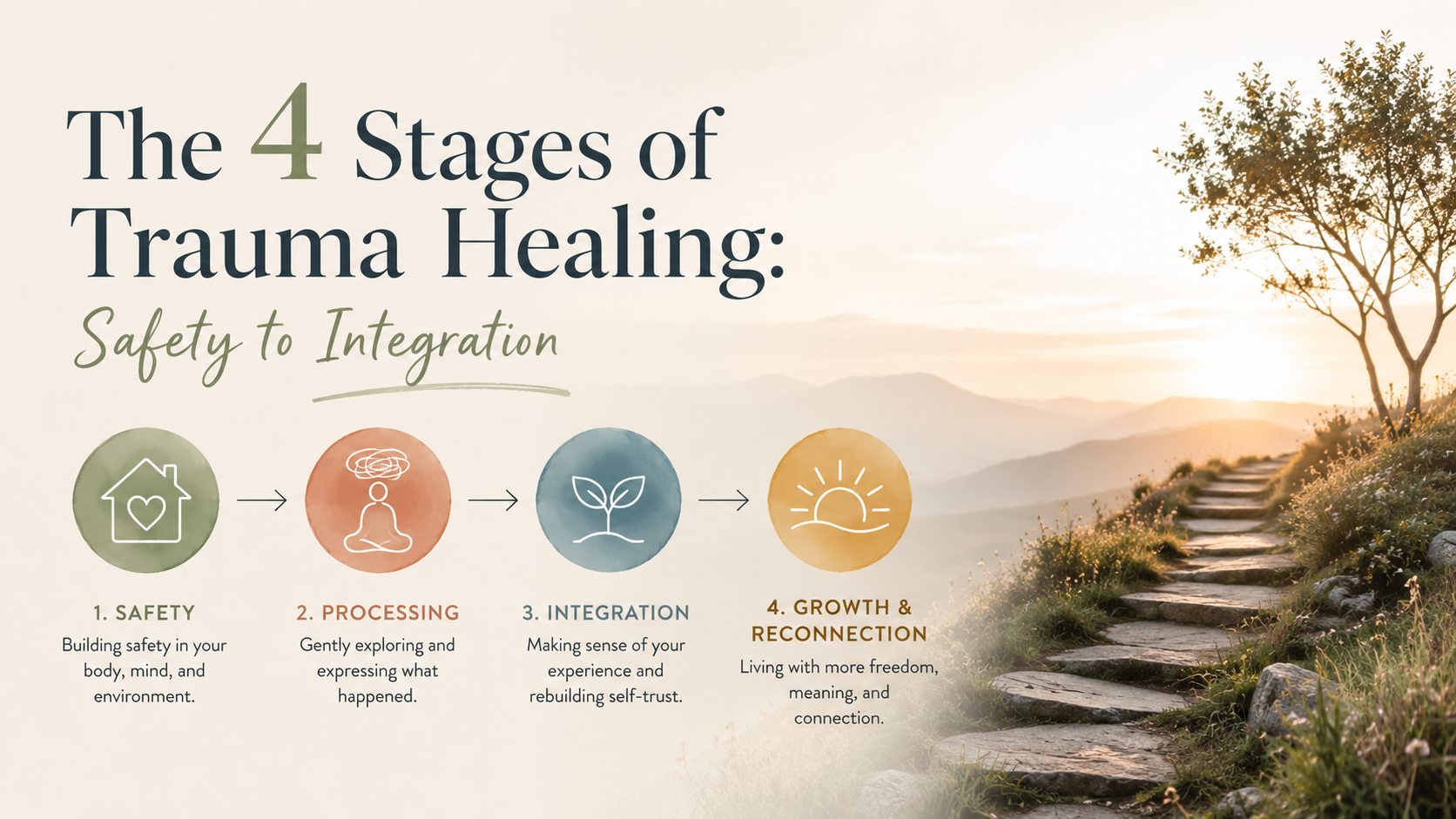
Paras note: Please take these steps at your own pace. I’m not an expert, the framework is a simplified generalization. Clinical trauma recovery is rarely linear, individuals frequently cycle back and forth between stabilization and memory processing rather than moving strictly from one stage to the next.
Healing from trauma involves a multi-stage process that typically includes creating a sense of safety, processing traumatic memories, and integrating these experiences into one’s life in a healthy manner. Here is an overview of each stage:
- Safety and Stabilization:
- Creating Safety: Establishing a sense of physical and emotional safety is the foundation of trauma healing. This involves ensuring a safe environment, stable relationships, and developing trust with a therapist or support network.
- Stabilization: Learning coping strategies to manage symptoms of trauma such as anxiety, flashbacks, and hypervigilance. Techniques may include mindfulness, grounding exercises, and self-care routines.
- Processing Traumatic Memories:
- Exploration: Gradually exploring and confronting traumatic memories in a controlled and supportive setting. This often involves talking about the trauma with a therapist, writing about it, or using creative expressions like art or music.
- Therapeutic Techniques: Various therapeutic approaches can be employed, such as Cognitive Behavioral Therapy (CBT), Eye Movement Desensitization and Reprocessing (EMDR), and somatic therapies. These help in reprocessing and re-framing the traumatic experiences.
- Integration and Consolidation:
- Making Sense of the Trauma: Understanding and making meaning of the traumatic experiences, recognizing their impact, and incorporating these insights into one’s identity and life narrative.
- Building Resilience: Developing resilience by fostering strengths and adaptive coping mechanisms. This includes enhancing self-esteem, building supportive relationships, and setting goals for the future.
- Post-Traumatic Growth:
- Personal Growth: Many individuals experience personal growth following trauma, finding new strengths, values, and a deeper sense of purpose.
- Life Integration: Integrating the trauma into a broader life context, where it becomes a part of one’s story but no longer defines their entire identity. This often involves forgiving oneself, others, or the circumstances, and finding ways to use the experience to contribute positively to oneself and others.
Throughout this process, continuous self-care and support from loved ones or support groups play a crucial role in facilitating healing and maintaining progress.
Hey folks, it’s Paras!
If you have a request to see a tech product, summary on personal development or want a custom design for clothing and merch … Please do let me know through the links below.

Join me or support my work
💌 Monthly email sign up for all posts
▶️ YouTube | TikTok | Instagram
👍 Facebook | X | Blog
🎤 Podcasts: My Stories | Self Growth
Other links:
☕ Buy me a Coffee
🛒 My Amazon
👕 My Merch